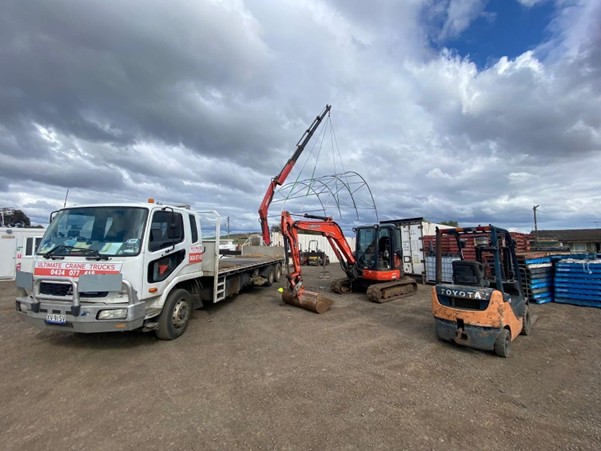
Whether you’re managing a multi-storey construction project, organising a large-scale delivery, or coordinating a complex lift in a tight-access Melbourne site, one factor remains constant: success begins with a proper site assessment.
In crane truck operations, overlooking the assessment process can result in costly delays, safety risks, and non-compliance with Australian regulations, all of which are entirely avoidable with expert planning.
Discover what happens during site assessments for crane truck jobs and how it directly impacts safety, efficiency, and bottom-line outcomes with our experts at Ultimate Crane Trucks.
Why Site Assessments Matter in Crane Truck Operations
No matter what kind of operations you’re planning to use crane trucks in, the risks are significant. That’s why a site assessment isn’t optional. Here are a few more things to consider:
- Legal and regulatory compliance
According to the Occupational Health and Safety Act 2004 (VIC) and the subsequent Occupational Health and Safety Regulations 2017, employers and contractors must ensure that all high-risk machines, including crane trucks, are operated in a manner that eliminates or reduces risks to health and safety.
A core part of this duty is conducting a thorough site assessment.
Furthermore, Australian Standards such as AS 2550.1 (Safe Use of Cranes) and AS 1418 (Design of Cranes) mandate that site managers or contractors evaluate conditions, load characteristics, access constraints, and environmental factors before any lift.
Failure to comply with these requirements can lead to significant penalties, project delays, or worse, workplace injuries
- Safety-first planning
Ground instability, overhead power lines, limited turning space, or misjudged load weights can all turn a routine lift into a high-risk situation. A site assessment identifies these hazards early, allowing operators or contractors to apply control measures like ground mats, exclusion zones, or alternative access plans before the truck even arrives.
Pre-Assessment Preparation
A well-planned site assessment starts with clear communication, accurate documentation, and a full understanding of the project scope. This preparation phase allows both the client and crane operator to align expectations without overlooking details.
Client briefing and initial scope review
The first step crane truck companies or contractors often take is to gather critical information from the client or project manager. This typically includes:
- Type of lift required: This can be, for example, materials delivery, rooftop placement, and structural steel installation.
- Load specifications: Dimensions, weight, fragility, and lifting points
- Timeframe and schedule constraints
- Access and location details: This includes the street address, nearby obstructions, and traffic conditions.
This information allows the crane operator to identify whether additional personnel, such as a dogman or rigger, will be required or if a different crane configuration may be needed.
Document Review & Site Plans
If available, crane truck operators review architectural drawings, site plans, or engineer-certified lifting diagrams to confirm key dimensions and structural limits. These help determine:
- Clearances for setup and boom movement
- Potential load-bearing concerns
- Building heights and lift radii
- Proximity to underground services or restricted zones
If no plans are available, the operator will flag this for discussion during the on-site inspection.
Permit and Compliance Check
Most professional crane truck companies, like Ultimate Crane Trucks, arrange and finalise all permits and documents before starting operations. This can include council permits, VicRoad notifications, and environmental constraints.
Having these early ensures the job proceeds smoothly and without legal hurdles.
On-Site Technical Inspection
The core of any crane truck site assessment happens on the ground. The main goals here are to verify conditions, identify risks, and finalise the setup plan.
Step 1: Assess ground conditions and stability
The first check is always the surface the crane truck will operate on. Operators evaluate:
- Soil type and compaction (e.g., asphalt, gravel, grass, or reclaimed fill)
- Load-bearing capacity and risk of subsidence
- Need for outrigger pads or crane mats to stabilise the vehicle
Naturally soft or weather-born sloped ground may require reinforcement or an alternate staging area, decisions that must be made before setup.
Step 2: Assess routes and manoeuvrability
Access is everything. The team considers traffic flow, control points, proximity to pedestrian traffic, width and height clearances, and turning radius requirements.
In some cases, temporary fencing or traffic management may be recommended to ensure safe entry and exit of crane trucks, especially with heavy or bulky loads.
Step 3: Overhead and underhead hazards
Crane operations involve vertical and horizontal reach, so identifying aerial and subsurface hazards is essential. These include:
- Overhead power lines requiring minimum clearance distances under Electrical Safety Regulations 2019 (VIC)
- Tree canopies, signage, and streetlights
- Basements, pits, or underground services that may affect load distribution
Step 4: Lift zone analysis
Finally, operators examine the lift zone and map out the following:
- Exact load placement points
- Exclusion zones for unauthorised personnel
- Escape routes and emergency access points
All of these factors influence the crane selection, configuration, and lift sequencing.
Reporting, Planning, and Safety Documentation
After completing the site assessment, clients receive a clear, detailed outcome report that acts as the operational blueprint for the job ahead. This includes the following:
1. Site-specific lift plan
Based on the assessment, a Site-Specific Lift Plan (SSLP) is created. This plan outlines the:
- Type of crane truck selected based on reach, capacity, and site constraints
- Load weights and lift radius calculations
- Crane positioning and outrigger setup diagram
- Sequence of operations, including lift staging, personnel required, and estimated duration
- Traffic or pedestrian control measures, if applicable
This plan ensures that every team member, from operator to ground crew, understands the job scope and their role in it.
2. Risk assessment and safety work method statement (SWMS)
Under Victorian OHS regulations, any high-risk construction work, including crane use, must be supported by a safe work method statement. This document covers identified hazards, emergency procedures, control measures, and all other safety measures required at the time of operation.
This SWMS is often shared with the client or principal contractor and must be kept on-site during operations.
3. Compliance and permit documentation
If the assessment identifies other missing documents, this point in the process is the best time to address them. Organising all documentation before lift day minimises administrative delays and ensures full compliance with WorkSafe Victoria and local council regulations.
4. Costing and timeline adjustments
The post-assessment report can also redefine the final quote. This is due to additional crew is needed, load paths are longer than expected, or an increase in time on site due to complexity issues.
You’ll receive an updated project cost and time estimate based on the real-world site conditions.
Find the Right Crane Truck Partner for Your Business
A professional site assessment is the foundation of a safe, legal, and efficient crane truck operation. From identifying site risks to planning lift strategy and securing the right permits, every step is designed to mitigate downtime, avoid safety breaches, and keep your project on track.
At Ultimate Crane Trucks, we have years of experience delivering peace of mind to our partners for their crane truck needs. Contact us today and experience the gold standard in crane truck logistics.