
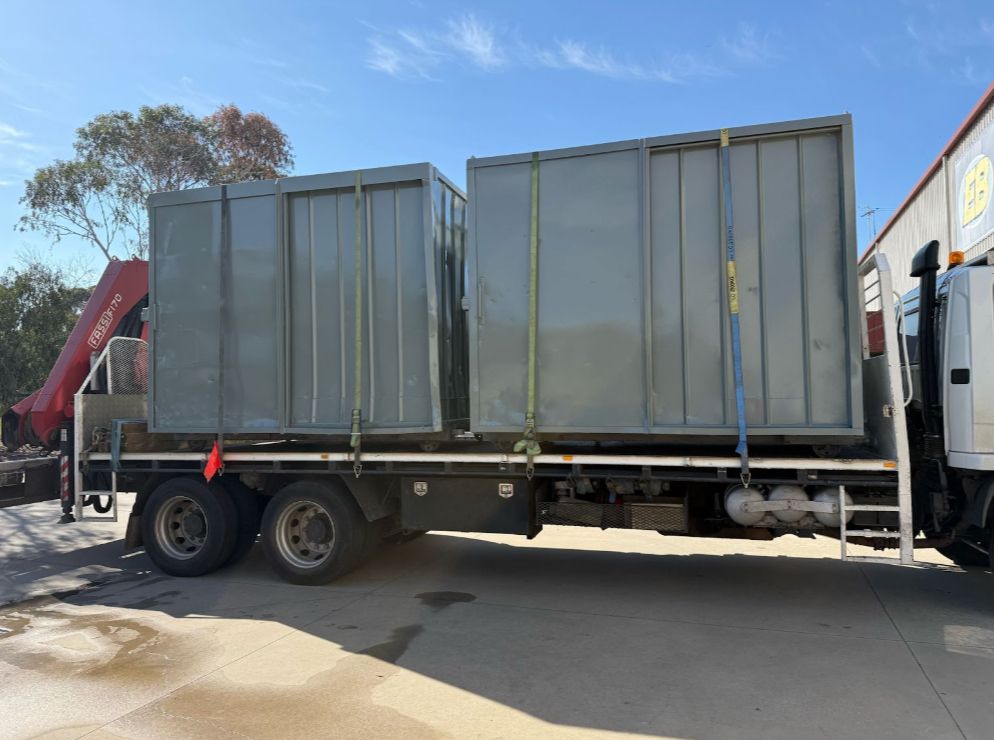
Experienced crane truck operators, business owners, and project managers are highly aware that Australia’s weight and transport laws are crucial for keeping jobs on track and avoiding legal headaches.
The tricky part? Australia doesn’t have a single set of rules. While some states follow the National Heavy Vehicle Regulator (NHVR), others like Western Australia and the Northern Territory enforce their own systems with different permits, limits, and approval processes.
In this guide, our experts at Ultimate Crane Truck will break down exactly what you need to know about crane truck regulations across each state, so you can avoid costly delays, stay compliant, and keep your project moving without a hitch.
What is the National Heavy Vehicle Regulator (NHVR) and Its Role
If you’re operating crane trucks in Australia, the first step to compliance is understanding whether your vehicle falls under the National Heavy Vehicle Regulator (NHVR).
What is the NHVR
The NHVR is the independent body responsible for regulating heavy vehicles over 4.5 tonnes of Gross Vehicle Mass (GVM) in most Australian states and territories. It was established to create national consistency in heavy vehicle regulation, particularly around mass limits, road access, fatigue management, vehicle standards, and heavy vehicle accreditation.
States currently governed under the NHVR include:
- Victoria (VIC)
- New South Wales (NSW)
- Queensland (QLD)
- South Australia (SA)
- Tasmania (TAS)
- Australian Capital Territory (ACT)
States not covered by NHVR:
- Western Australia (WA) and Northern Territory (NT) manage their own heavy vehicle road laws and operate separately.
How NHVR laws apply to crane trucks
Under the NHVR, weight limits apply to the entire load of the vehicle, including the crane structure, boom, counterweights, and any carried equipment. These all contribute to the declared weight and must fall within regulated limits or be supported by a valid permit.
Crane trucks are typically classified as Special Purpose Vehicles (SPVs) under the Heavy Vehicle National Law (HVNL). This classification includes vehicles built for a task other than carrying freight, such as cranes, fire trucks, and concrete pumps.
Because crane trucks often exceed standard size and weight limits due to their design (especially with extended booms and counterweights), they commonly require a Class 1 Oversize/Overmass (OSOM) permit to travel on public roads legally.
Class 1 Oversize/Overmass permit allows SPVs to:
- Operate within approved mass and dimension tolerances
- Travel on designated routes that can safely support their size and weight
- Meet any conditions such as travel time restrictions, speed limits, or the use of pilot vehicles
Keep in mind that these permits are often route-specific, so advanced planning and approval are essential.
State-by-State Laws for Crane Trucks Operations in Australia
Victoria (VIC)
Victoria operates under the NHVR, meaning crane trucks must comply with the Heavy Vehicle National Law (HVNL). However, VicRoads retains control over local network conditions, bridge assessments, and special restrictions.
Permits are applied for via the NHVR Portal, and processing times typically range from 3–10 business days, depending on route complexity. You may also be asked to submit structural assessments or consult directly with VicRoads if the load exceeds the design thresholds of key infrastructure.
Crane trucks in VIC typically fall under the Special Purpose Vehicle – Class 1 Oversize/Overmass (OSOM) category. Permits are mandatory for:
- Vehicles over 2.5 metres wide
- Heights exceeding 4.3 metres
- Lengths over 12.5 metres (rigid) or 19 metres (articulated)
- Axle group masses beyond general access limits (e.g. >6.0t for a single steer axle, >16.5t for tandem groups)
Victoria also imposes strict route-specific controls, particularly in metro Melbourne, where many roads:
- Have low bridge clearances
- Are prohibited to oversize loads during peak hours (typically 7–9am and 4–6pm)
- Require pre-approved paths, which you can plan using the NHVR’s Journey Planner, but cross-reference with VicRoads’ local road restrictions
New South Wales (NSW)
Transport for NSW (TfNSW) enforces state-specific conditions around route access, bridge integrity, and movement timing in NSW. However, similar to Victoria, crane trucks operating in NSW are usually treated as Special Purpose Vehicles (SPVs) requiring Class 1 OSOM permits.
Some of their more unique key requirements include:
- Pilot/escort vehicles for widths exceeding 3.5m or over-length vehicles on undivided roads
- Time-of-day restrictions in metro zones (e.g. bans on OSOM travel during weekday peak hours or after 10 pm in noise-sensitive areas) as well as near schools, hospitals, or event precincts
- Use of the OSOM Network Map and NSW Class 1 access pre-approvals, especially for bridges or tunnels
- Sydney Harbour Tunnel and M5 East Tunnel restrict vehicle height to 4.4m, effectively limiting passage for many crane trucks unless a bypass route is approved
Queensland (QLD)
Queensland enforces NHVR rules through the Department of Transport and Main Roads (TMR), which also oversees infrastructure protection, asset loading, and weather-related road access. Class 1 OSOM permit are also similar to Victoria.
Crucial QLD-specific conditions:
- Many rural bridges, especially along the Bruce Highway, have mass-restricted spans or low structural ratings
- During the wet season, OSOM vehicles are frequently restricted from travel in Far North QLD or central inland areas due to flooding or road degradation
- All OSOM movements must be planned using the NHVR Journey Planner, but TMR bridge load assessments should be cross-checked for rural routes
- Height breaches over 4.6m must be cleared by power/utility providers in coordination with TMR
- OSOM permits often specify daylight-only travel, especially in regional towns
Western Australia (WA)
WA is outside the NHVR framework. All crane truck operations fall under Main Roads WA (MRWA) and the Restricted Access Vehicle (RAV) system. This includes both truck-mounted and self-propelled cranes that exceed general access limits.
Permit essentials:
- RAV classification and permit via Main Roads WA permit portal
- Route approval via the RAV Mapping Tool
- Axle mass limits are typically capped at 21.5t for tandem groups, but conditional approvals can vary
Unique WA challenges:
- Every route must be approved. Even turning off a compliant road onto a council-controlled road requires specific approval
- Many towns require local council consent, especially when crossing older bridge infrastructure or sealed rural roads
- Triple road trains and OSOM loads often share regional corridors, so crane operators must coordinate movements to avoid conflict
Unlike NHVR states, WA does not tolerate unauthorised route deviations. If a mobile crane deviates from its approved path, even due to detour signage, the vehicle may be ordered to return under escort or offload counterweights on the spot.
South Australia (SA)
South Australia follows NHVR rules but applies additional movement and road-use restrictions through the Department for Infrastructure and Transport (DIT). The state’s varied terrain, from urban grid to steep hills, makes crane truck routing especially sensitive.
What makes SA different:
- Movement through metro Adelaide is restricted during peak times and in proximity to schools and aged care centres
- Adelaide Hills, Barossa Valley, and Victor Harbor regions contain roads with severe grade restrictions, making them inaccessible to longer wheelbase cranes
- Many councils require separate approval for access to construction zones or parking/staging on local streets
- Pilot vehicles are typically required for vehicles with widths over 3.1m and vehicles with long rear overhang or hat obstruct lane use during turns.
Tasmania (TAS)
Tasmania operates under the NHVR but requires highly localised access control due to limited infrastructure. The Tasmanian Heavy Vehicle Access Map is non-negotiable when planning any OSOM move.
Key considerations:
- Many bridges, especially in northern and coastal regions, have strict axle group limits and may not support mobile cranes without prior assessment.
- Routes with steep cambers or sharp bends (common in historic towns) may trigger access denial.
- The state has limited bypass routes. One road may be the only legal option into a town, making route-specific permits even more critical.
Northern Territory (NT)
NT is not part of the NHVR and regulates heavy vehicles through the Department of Infrastructure, Planning and Logistics (DIPL). Most crane trucks also fall under Class 1 Load Permits, especially when exceeding general access limits.
NT-specific factors:
- Permits are typically granted on a case-by-case basis
- Many regional roads are unsealed or flood-prone, requiring alternate vehicle support or pre-approved detour plans
- There are limited turnaround areas in remote regions, so operational planning is essential
- There is no mutual permit recognition between NT and NHVR states. A legal route from QLD into NT still requires a new application under NT’s system.
Australian Capital Territory (ACT)
The ACT is governed by NHVR regulations but relies heavily on NSW coordination due to its geography. Most OSOM movements either start, end, or pass through NSW, so operators must secure dual approval.
Requirements include:
- NHVR-issued OSOM permits
- Route alignment with NSW’s Class 1 OSOM networks
- Additional clearance for federal zones (e.g. near Parliament House or diplomatic precincts)
ACT-specific challenges:
- Urban noise restrictions often ban OSOM crane movement near residential areas during early mornings or late evenings
- Construction zones around Civic and Barton require traffic management plans and may restrict parking or unloading without prior approval
Stay Compliant, Stay on Track with Ultimate Crane Trucks
When it comes to transporting heavy loads, compliance is critical. With regulations varying across states and the risks of non-compliance high, having the right partner makes all the difference.
At Ultimate Crane Trucks, we take the guesswork out of crane truck logistics. Our expert team understands the legal landscape and handles the details, so your project stays safe, on schedule, and stress-free.
Contact us today and let us take the worry off your hands.


