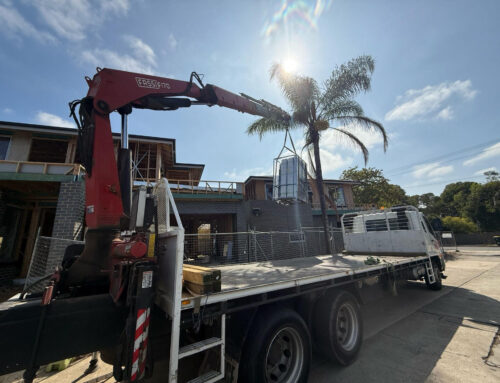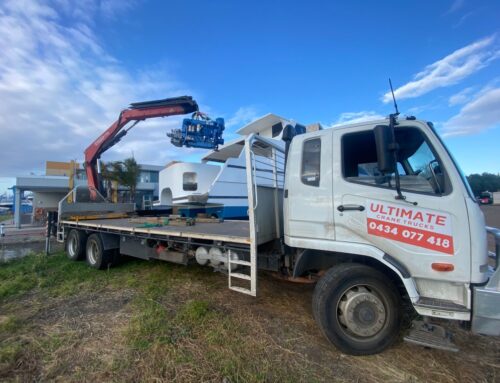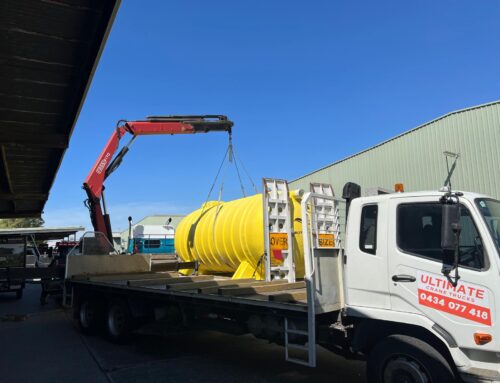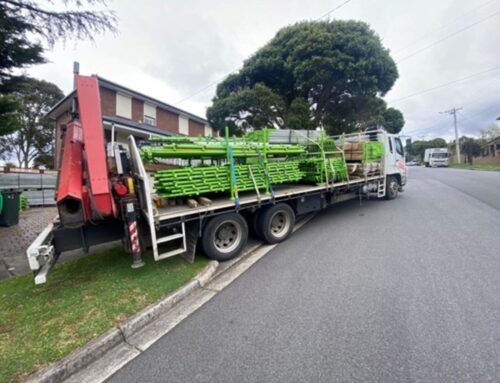
When choosing a crane-mounted truck, it’s easy to assume that the model with the longest boom or highest lifting capacity is automatically the best choice. But in practice, these two specifications work in opposite directions. As boom length increases, the amount of weight a crane can safely lift decreases.
To find the right crane-mounted truck that meets your project’s needs, you have to find a balance between height, capacity, and safety.
In this article, our experts at Ultimate Crane Trucks will explain how boom length and load capacity interact, what to consider when comparing configurations, and how to choose the right crane-mounted truck for your specific lifting requirements.
How Does Boom Length and Load Capacity Work?
What is boom length?
Boom length refers to the total extension of the crane’s lifting arm. In a crane-mounted truck, it determines how high you can lift and how far you can reach horizontally.
When determining what boom length you need for your project, it’s important to distinguish between vertical reach (tip height) and horizontal reach (load radius). For example, if you extend the boom vertically to 30 metres, it can reach great height but may not move loads far outward.
In contrast, when you lower that same boom to a shallower angle, you increase its reach. However, this also increases the load radius, which reduces its lifting capacity.
The boom’s design also matters:
- Straight telescopic booms extend linearly and are ideal for lifts that require maximum vertical height and stability.
- Knuckle (articulated) booms, on the other hand, offer better manoeuvrability and outreach in tight urban or residential areas but generally have reduced lifting power at full extension.
What is load capacity?
Load capacity, or rated lifting capacity, defines the maximum weight a crane-mounted truck can safely lift at a given boom length and radius. It’s measured in tonnes and specified on the manufacturer’s load chart.
As the boom length increases and the boom angle decreases, the crane’s lifting capacity drops sharply. This is because extending the boom increases leverage and reduces stability. For instance, a 30-metre boom at an 80° angle can safely lift about 28 tonnes, but the same boom at 45°, which increases the radius, may only lift around 6 tonnes.
Australian standards require that all lifting operations account for these variations. According to AS 2550, lift plans must factor in boom length, angle, and load radius to prevent overloading and ensure stability. Likewise, Safe Work Australia mandates that cranes operate on firm, level ground with outriggers or stabilisers fully deployed to maintain rated capacity.
How boom length and load capacity interact
Boom length and load capacity exist in constant tension. Increasing one inevitably reduces the other. The longer the boom, the greater the pull or the bending action on the crane’s base. This additional leverage requires either stronger materials, greater counterweight, or reduced load to remain within safe operating limits.
The same applies to stability. Every crane has a tipping limit based on counterweight distribution and outrigger extension. Extending the boom too far without adjusting these factors can create instability, even if the load seems within capacity.
Longer booms and higher capacities also come with higher purchase and maintenance costs, as they require reinforced materials and advanced hydraulic systems.
For most Melbourne-based crane-mounted trucks, these are their average reach and weight capacity:
- Small crane-mounted trucks: Small crane trucks like the HMF 1130K-RCS can lift around 0.5 to 10 tonnes and reach 5.5. To 14 metres.
- Mid-sized crane-mounted trucks: Crane trucks such as the Hyva HB-130 have reaches of around 10 to 17 metres and can carry 10 – 30 tonnes.
- Large crane-mounted trucks: These trucks are typically used for heavy industrial, infrastructure, or large prefab lifts. They can carry 30 – 40 tonnes or more for some models, with maximum lifting heights of around 30 – 35 metres.
How to Choose the Right Crane-Mounted Truck Based on Boom Length and Load Capacity
When matching your project’s needs with the right boom length and load capacity, the goal is to lift efficiently, stay compliant with safety standards, and avoid unnecessary operating costs. Here’s a practical, step-by-step framework you can follow before making your decision.
Step 1: Identify your load requirements
Start with the fundamentals: the weight, shape, and distribution of the load.
- Determine the maximum load weight that needs to be lifted.
- Consider the load’s centre of gravity and whether it’s compact or unevenly distributed.
- If you’re lifting items like construction panels, machinery, or heavy building materials, account for dynamic loads (e.g., sway from wind or motion).
Knowing this helps you pinpoint the minimum load capacity your crane must handle safely without straining its structure.
Step 2: Determine the required reach and capacity balance
Next, calculate how far and how high you need to lift. Measure both the horizontal radius (distance from the crane base to the load) and the vertical height required. Remember, as reach increases, lifting capacity decreases due to leverage forces.
Refer to the manufacturer’s load chart to find where your load weight and radius intersect. This shows if a crane can handle the job at full extension.
Finding the balance between boom length and load capacity is the key decision point. Too short, and you can’t reach your target; too long, and you sacrifice lifting strength.
Step 3: Match the crane class to your load profile
Once you’ve determined your reach and weight requirements, align them with the right crane class:
- Small crane trucks (up to ~10 tonnes) — for lighter lifts and compact sites.
- Mid-sized crane trucks (10–30 tonnes) — for general construction, prefab panels, and commercial materials.
- Large crane trucks (30–40+ tonnes) — for heavy industrial components or extended boom work.
Cross-check your chosen class against the load chart to confirm that it maintains safe lifting capacity at your required boom angle and radius. Remember, choosing too small a crane limits your reach, but over-specifying can increase costs unnecessarily.
Step 4: Consult a qualified crane-mounted truck provider
Before finalising your choice, verify your selection with an expert. Experienced operators and planners, such as the team at Ultimate Crane Trucks, can review your lift requirements, site layout, and project constraints to recommend the most suitable configuration.
Their insight ensures your chosen crane not only meets technical specifications but also performs efficiently and safely in real-world conditions.
Lift Smarter with the Right Crane Truck and Provider Partner
Working with an experienced provider ensures your boom length, load capacity, and lift plan are all aligned for performance and compliance.
At Ultimate Crane Trucks, our fleet and operators are equipped to handle projects of any scale with accuracy and professionalism. From tight urban lifts to high-reach industrial work, we provide the expertise and reliability you need to lift safely and efficiently.
Get in touch with us today to find the perfect crane solution for your next project.