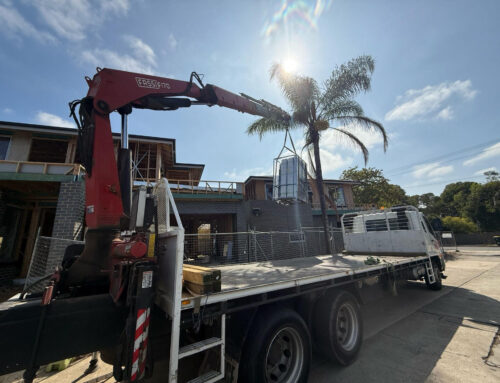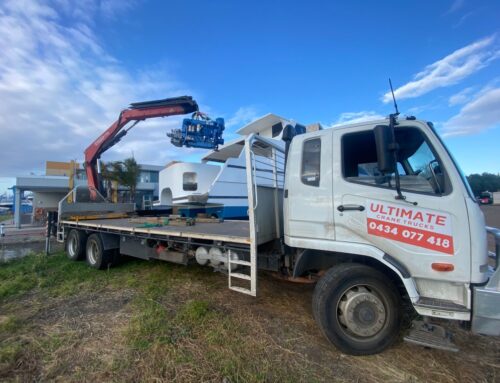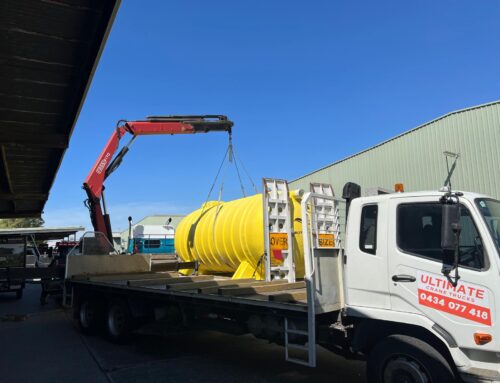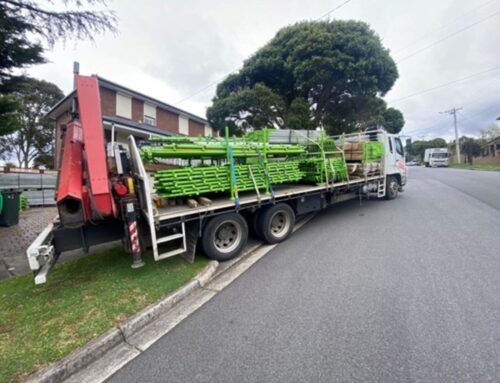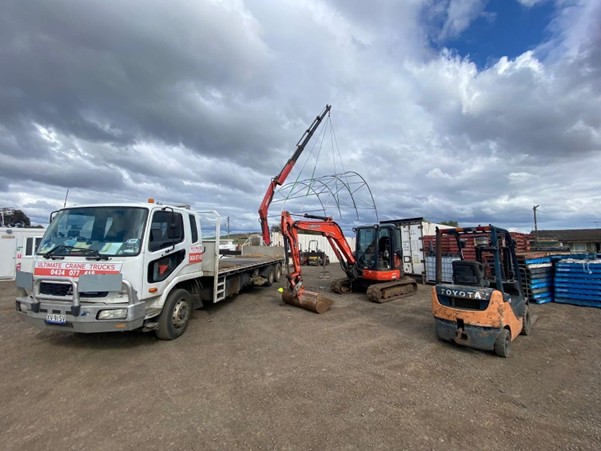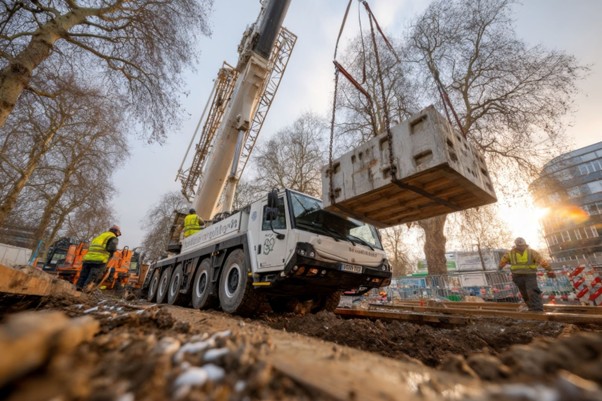
Melbourne’s narrow laneways, sloping driveways, and tight suburban blocks often make lifting and transport jobs far more complex. Standard cranes often can’t get close enough or operate safely on uneven ground.
But with the right preparation and the right partner, even the most restrictive sites can be managed safely and efficiently. In this guide, we’ll walk through how to plan your project for narrow or sloped work sites and what to know before booking your next crane truck hire.
Can a Crane Truck Handle My Site?
If your site has a steep driveway, tight side access, or awkward terrain, you’re probably wondering whether a crane truck can even get the job done. The answer is yes. With the right truck and the right planning, it absolutely can.
Here’s why:
- Truck-mounted cranes combine mobility and reach in one vehicle, allowing them to navigate narrow streets, set up on uneven ground, and still lift heavy materials with precision.
- Modern crane truck hire services are designed to safely and efficiently manage complex access conditions.
But before booking, it’s worth noting that every site is different. Access width, slope degree, and surface stability all affect what type of crane truck will be suitable. The following steps will help you determine what to do.
How to Plan Crane Truck Work for Difficult Access Sites
Step 1: Assess your site before crane truck hire
Systematic site assessment is the key to reducing risk, avoiding delays, and making sure your crane truck hire is appropriate for the job. Additionally, Safe Work Australia (SWA) mandates that the person conducting the business or undertaking is responsible for choosing the correct crane or mobile plant for the task and managing the site conditions.
Here’s a quick checklist to guide you:
- Access width and slope angle: Measure the narrowest point of entry (gate, laneway, driveway) and determine the maximum gradient the site presents.
- Ground conditions: Identify the surface (asphalt, concrete, compacted soil, gravel) and check for any soft or recently back-filled areas. The risk of overturning or structural failure increases significantly when a crane outrigger is placed on unstable ground.
- Obstructions: Record overhead hazards (powerlines, trees, buildings), side clearance constraints, and anything that could restrict boom movement or truck setup.
- Lift weight and radius (distance): Provide the crane hire company with the weight of the load and the radius from crane centre to pick-point if you can. This determines the correct crane class and setup.
- Photos and videos: Visuals allow the hire provider to anticipate access difficulties and recommend the correct truck, stabilisation pads, or alternative setups.
Step 2: Choose the right crane truck for your terrain
When selecting the correct vehicle for your site, you have to match stability systems, boom configuration, and mobility to your environment. This prevents tip-over incidents or ground failure.
Narrow access sites
At Ultimate Crane Trucks, we usually recommend knuckle-boom or articulated cranes (Hiab style) for narrow access sites such as inner-city laneways or residential driveways. These cranes can operate within access widths as small as 2.5 m, depending on the truck model and outrigger spread.
This is primarily due to their multi-jointed booms, which allow operators to work around corners or obstacles while maintaining a smaller setup footprint.
Sloped or uneven sites
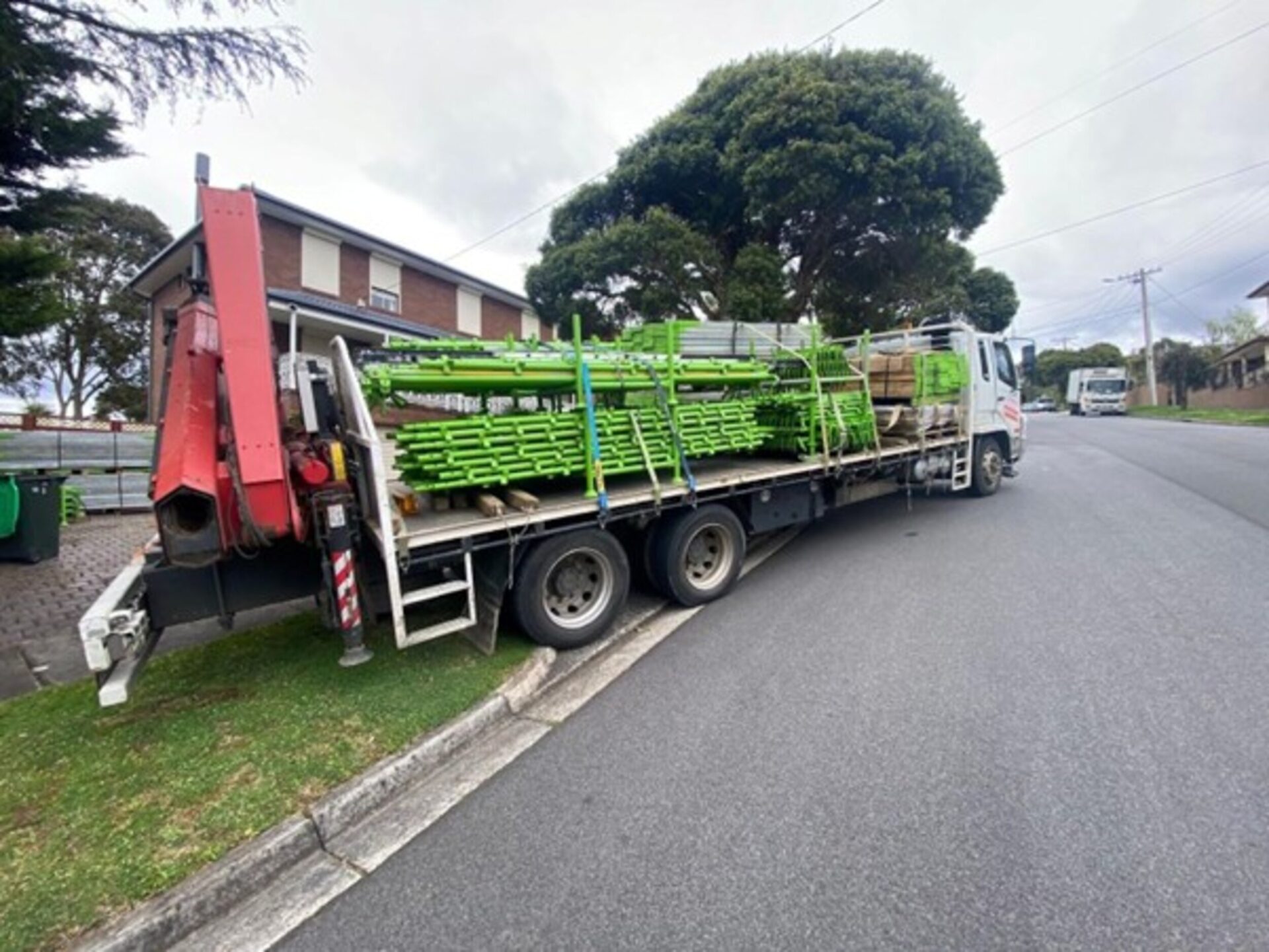
For uneven or sloped terrain, we recommend trucks fitted with hydraulic, independently adjustable outriggers and load-sensing systems. These maintain level platforms on gradients up to 5–6 °, though each manufacturer specifies exact limits.
It’s also best to use stabiliser mats and cribbing systems, particularly on soft or recently compacted soil, to distribute outrigger loads across a larger area and reduce ground pressure.
Step 3: Prepare your work site for safe operations
Even the best equipment needs a well-prepared environment to perform safely. Here’s how to prepare your site effectively:
- Ground levelling and support: Compact or level the area where outriggers will rest. If the surface is soft or uneven, use timber pads or engineered stabiliser mats rated to handle at least the manufacturer’s specified outrigger load.
- Access clearance: Remove obstructions, vehicles, or materials that might block approach paths. For residential or urban areas, ensure clearances of at least 600 mm on each side of the crane’s swing radius.
- Safety and traffic control: Under the Road Management Act 2004 (Vic), any crane setup that partially occupies a public road requires a traffic management plan. Coordinate barriers and spotters early to avoid compliance breaches.
- Weather and soil conditions: Wet or shifting soil as a result of various weather conditions can drastically reduce ground bearing capacity. For example, clay loses up to 50 % of its load-bearing strength when saturated. If rain is forecast, plan to add cribbing layers or delay lifting until stability is confirmed
- Communication and coordination: Ensure all trades are clear on lift timing and exclusion zones. Use a lift plan or Job Safety Analysis (JSA) document that identifies hazards, controls, and responsible personnel.
Step 4: Budget and schedule for difficult access jobs
Jobs involving slopes or restricted space often require longer setup and pack-down times. A transparent budget prevents frustration later.
Consider the following factors:
- Site preparation and inspection costs: Some providers offer pre-site visits to confirm access and ground conditions. This small upfront cost helps avoid rescheduling fees.
- Traffic control and road permits: Councils such as the City of Melbourne require 5–10 business days’ notice for temporary road occupancy permits involving crane operations.
- Contingency buffers: Allow 10–15 % additional time and budget for unplanned issues such as soil softening, unexpected slope angles, or nearby construction impacts.
When you factor these elements early, you reduce the likelihood of on-site stoppages and keep the project within budget.
Get Expert Support for Your Difficult Access Lift
When space is tight or the terrain uneven, experience matters more than equipment. This is why it’s important to work with specialists who understand the circumstances of the job.
A specialist in difficult access crane truck hire understands how to evaluate gradient, soil load, and lift radius before the truck even arrives, ensuring every movement is safe, compliant, and efficient.
At Ultimate Crane Trucks, we provide tailored lifting solutions for Melbourne’s most challenging sites. From narrow laneways to steep driveways, our fleet and operators are purpose-built for precision, safety, and compliance.
Call us today to discuss your site.