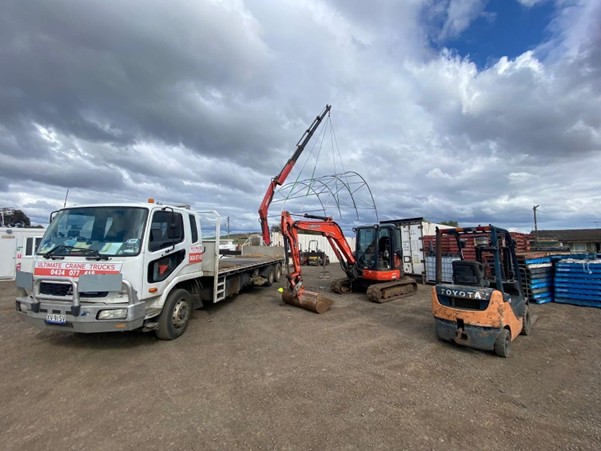
How do you find a crane truck that fits your urban site’s tight spaces and complex regulations? What factors ensure safe operation while meeting project deadlines?
Choosing the right crane truck hire requires the consideration of several factors. You need equipment that matches your load requirements, complies with local rules, and can navigate crowded city streets without delays.
This guide answers these critical questions and provides clear steps to help you make the best hire for your urban project.
Key Factors to Consider Before You Hire
Choosing the right crane truck hire starts with a clear understanding of what your project demands. The decisions you make here directly affect safety, efficiency, cost, and overall project success. Below are the most important factors to evaluate before you commit to a hire.
1. Define your lift requirements
Start by identifying what you need to lift, how much it weighs, and how high or far it needs to go.
- Load weight and dimensions: Know the exact weight and size of your heaviest loads. Never estimate or assume. Incorrect figures can lead to selecting a crane that cannot safely handle the job.
- Lift height and reach: Confirm both vertical height and horizontal reach requirements. A crane may lift heavy loads but still lack the reach you need on site.
Accurate load and reach data helps your hire provider recommend the correct crane model and avoid underpowered equipment.
2. Check site access and conditions
Urban job sites often present tight access, limited manoeuvring space, and obstacles that affect crane placement.
- Site access: Ensure the crane can enter, position, and exit without issues. This includes checking street width, overhead power lines, parked vehicles, and clearance.
- Ground stability: Soft, uneven, or sloping ground can compromise crane stability. A site inspection may show if ground preparation, mats, or pads are required.
Confirming these conditions early prevents delays due to last‑minute changes or unsuitable equipment arriving on site.
3. Verify operator licensing and safety compliance
Safe crane operation depends on trained operators and regulated equipment. That’s why it’s important to ensure any operator provided is skilled and holds correct licences. At Ultimate Crane Trucks, all our operators are trained and licensed ensuring your project is completed without a hitch. We also have complete relevant safety standards and carry appropriate insurance coverage
4. Understand cost structure and inclusions
Price should never be the only factor, but cost clarity prevents surprises. Knowing total costs upfront helps you compare offers fairly and budget accurately.
- Breakdown of fees: Confirm what’s included including hire duration, delivery, operator, equipment setup, traffic control if needed, and any accessories such as slings or spreader bars.
- Duration and conditions: Know whether rates change based on hire length, time of day, or peak periods.
5. Confirm permits and local requirements
Urban lifts often require special permits or traffic management.
- Permit responsibilities: Determine who is responsible for acquiring permits and organising local approvals. This should be settled early to avoid downtime.
- Operational constraints: Cities often enforce noise or timing restrictions that can affect when lifts occur.
6. Plan for weather and environmental risks
Weather can change lift conditions quickly, especially in urban environments.
Cranes are sensitive to weather conditions, particularly wind. So, it’s important to plan around forecasts and have contingency plans. Apart from that, consider fuel use and emissions, especially if your site has sustainability goals or regulations.
Urban Project Considerations
Urban work zones come with public access issues, council permits, traffic management, and specific safety requirements. Planning for these considerations early keeps your project moving smoothly and avoids fines or delays.
Council permits and approvals
In cities across Australia, any crane activity that affects public space almost always requires local council approval. Most councils treat a crane truck parked on a street, footpath, or cycleway as a disruption to public infrastructure. So, you must lodge the right applications before work begins.
- Public space use: If your crane will occupy or operate over a footpath, road, or kerb, you typically need a council construction or hoisting permit.
- Lead time: Councils often take several business days to process applications, so start permit requests well before your scheduled lift.
- Documentation: Prepare lift plans, traffic management plans (TMP), insurance certificates, and site maps to support your application.
- Operational limits: Some councils specify work hours and noise restrictions, particularly in residential or mixed‑use zones, and expect lift activities to adhere to these limits.
Different councils may have bespoke forms and timelines, so check your specific Local Government Area (LGA) requirements early.
Traffic management and safety planning
Urban crane work often disrupts vehicle and pedestrian flows. Councils require Traffic Management Plans (TMPs) whenever public roads or footpaths are obstructed. These plans must show how traffic, cyclists, and pedestrians will be safely redirected or controlled during the lift.
Failing to meet traffic management requirements can lead to fines and abandoned work windows.
Permits for heavy or oversize vehicles
Crane trucks often exceed standard road dimensions or weights. Under the Heavy Vehicle National Law (HVNL), crane trucks are typically classified as Special Purpose Vehicles (SPVs) and may require oversize/overmass permits to operate on public roads legally.
Advanced coordination with your crane hire provider ensures the transport to and from the site complies with state and national heavy vehicle laws.
Neighbourhood impact and notifications
In many Australian cities, contractors must notify neighbouring residents or businesses before crane operations begin. This notification demonstrates goodwill and often forms part of council or permit requirements.
Take note, some councils require notifications 24–72 hours before work begins. There are also allotted hours for any kind of work involving noise and disruption to avoid complaints and fines.
Overhead obstacles and spatial restrictions
Urban sites often have more overhead and lateral hazards than rural ones. These obstacles affect crane placement and lift safety.
- Overhead lines and structures: Account for power lines, balconies, signage, and other protrusions in lift planning.
- Outrigger placement: Where possible, restrict outrigger placement to structurally sound paved surfaces. Many councils prohibit outrigger pads on footpaths or nature strips to protect infrastructure.
- Height restrictions: Surrounding buildings sometimes impose practical height limits on crane booms and loads.
Careful site surveys and consultation with your hire provider ensure you choose equipment that fits within these spatial limits.
Cost & Hire Option Breakdown
Prices can vary widely depending on the crane type, duration, operator inclusion, and additional services. Knowing how costs break down helps you budget accurately and avoid unexpected expenses. Here are some things to consider:
1. Types of hire: Wet hire vs dry hire
- Wet Hire
This option includes both the crane truck and a licensed operator supplied by the hire company. Wet hire offers full service, with the operator responsible for safe crane operation and compliance. It’s the most common choice for urban projects, especially where specialist skills or licensing are needed. - Dry Hire
With a dry hire, you hire the crane truck only, without an operator. This option suits clients with in-house, licensed operators or those who want to reduce hire costs. However, dry hire comes with increased risks and liabilities, so it’s less common in urban settings.
2. Common pricing models
- Hourly rates
Charging by the hour offers flexibility for short or unpredictable jobs. Rates can range from approximately AUD $150 to $400+ per hour depending on crane size and capabilities. Peak hours or weekends may also incur higher fees. - Daily or half-day rates
Most projects book cranes for full or half days, which often reduce the effective hourly cost. Daily rates depend on crane size, location, and included services. - Fixed project rates
Some providers offer fixed-price quotes based on job scope, duration, and complexity. This option gives cost certainty, but requires detailed project information upfront.
3. Additional costs to consider
- Delivery and setup fees
Transporting the crane truck to and from the site can incur separate charges, especially for distant or restricted locations. - Permit and traffic management costs
Obtaining council permits and implementing traffic control often involves fees. Some companies include permit management in their service, while others pass the cost to clients. - Operator overtime or waiting time
Extended waiting periods or work beyond agreed hours can attract overtime charges. - Equipment accessories
Additional rigging gear, slings, spreader bars, or safety equipment may come at extra cost.
Checklist Before You Finalise Your Crane Truck Hire
Before you confirm your crane truck hire, use this checklist to ensure you’ve covered all critical bases:
- Project Requirements Confirmed
Load weights, dimensions, height, and reach are accurately specified.
- Site Access and Ground Conditions Verified
Clear access routes and stable ground for crane setup confirmed.
- Operator Licensing and Safety Compliance Checked
Operator holds valid licenses; crane has up-to-date maintenance and safety features.
- Hire Company Reputation and Reliability Vetted
Positive reviews, proven track record, and transparent communication confirmed.
- Cost and Inclusions Clearly Understood
Detailed quote reviewed with delivery, operator, permit, and accessory costs included.
Choose the Right Crane Truck Hire for Your Urban Project
Choosing the right crane truck hire for urban projects requires careful planning and attention to detail. By understanding your project’s unique needs, considering local regulations, and selecting a reputable hire provider, you can ensure safe, efficient lifts that keep your project on track.
Ultimate Crane Trucks offers expert advice, a modern fleet, and seamless permit support tailored to Australian urban sites.
Contact us today for a free consultation and discover how we can help you find the perfect crane truck hire for your next project.