Getting oversized glazing units, skylights, or window frames onto upper floors is one of the trickier lifts on a build. Scaffolding gets you access, not lifting capacity, and carrying large panels up by hand risks both the glass and the crew. A crane truck does the heavy part of the job so the installers can focus on getting the fit right.
Anyone who has stood on scaffolding trying to manoeuvre a full-size window panel into an opening knows the problem isn’t the installation itself, it’s getting the unit up there safely in one piece. Multi-storey residential and commercial builds increasingly use large format glazing, and those panels are too heavy, too awkward, and too easy to damage to move by hand up several levels of scaffold.
This is where a crane truck earns its place on the site program rather than being an afterthought.
Why scaffolding solves access, not lifting
Scaffolding gets your crew to the right height and gives them a stable platform to work from, but it was never designed to be a lifting path. Carrying a large glazed panel up a scaffold stair or hoisting it level by level with rope and muscle multiplies the risk of a dropped or cracked unit with every extra storey. Using an appropriately planned crane truck lift can significantly reduce the manual-handling risks involved in moving large glazing units to height.
How a glazing lift actually runs on site

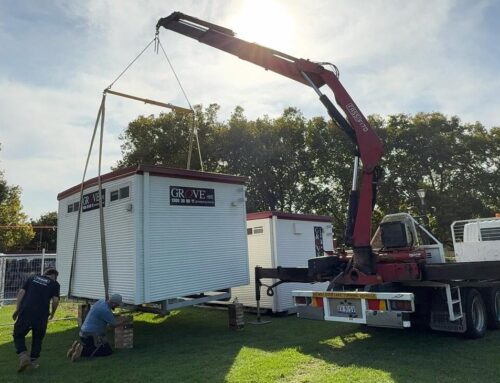
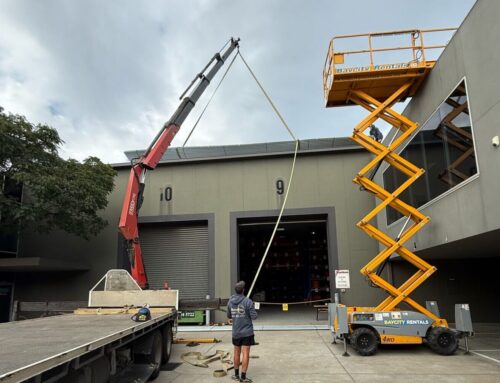
A typical window or glazing lift starts with the truck positioned close enough to reach the opening, which on a tight residential block often means working from the street or a narrow side access. The operator confirms the panel’s weight and dimensions, checks the swing path for scaffolding, power lines, and neighbouring structures, then lifts the unit slowly into position while installers on the scaffold or balcony guide it home. It’s a slower, more controlled process than it looks from the ground, and that’s deliberate.
What can go wrong without a controlled lift
In addition to working-at-height risks, large glazing units introduce significant manual-handling and load-control hazards. A crane lift keeps the panel stable and level throughout, with the operator able to pause or adjust the angle mid-lift if something on site needs a second look. Working at height guidance from WorkSafe Victoria makes clear that manual handling of heavy, awkward loads at height is exactly the kind of task that should be engineered out where a mechanical lift is available, and glazing installation is a textbook example.
Getting your site ready for a lift
The main thing a site manager needs to have ready is accurate panel dimensions and weight, along with clear access for the truck to set up close to the building. If scaffolding is already in place, letting the operator know its layout in advance helps plan the lift path before the truck arrives, rather than working it out on site. The same pre-operation safety checklist applies to every glazing job, confirming ground conditions, overhead hazards, and load ratings before anything goes up.
Got glazing or window units that need to go up rather than be carried up? Get in touch with Ultimate Crane Trucks about your build, or call 0434 296 900 for a quote.