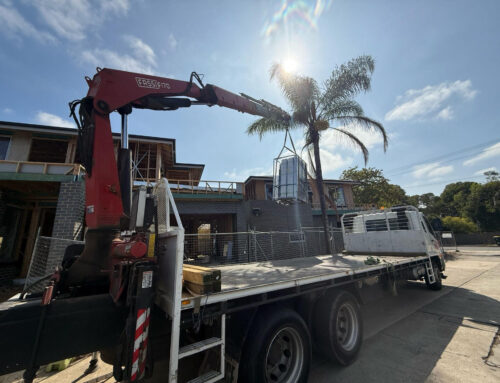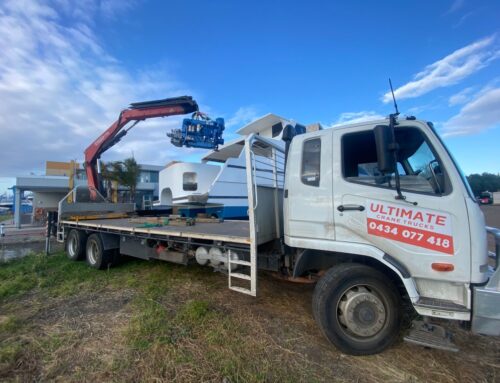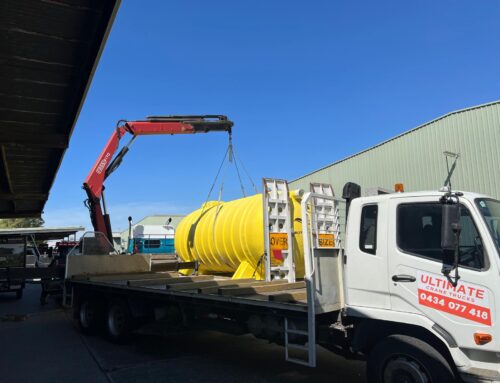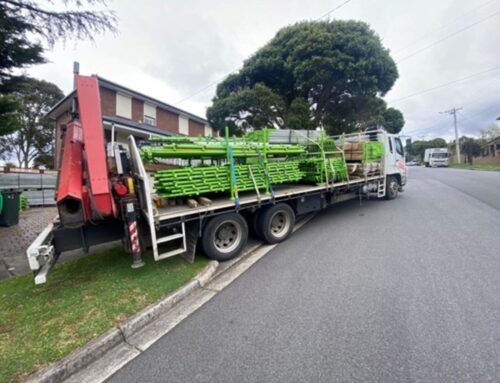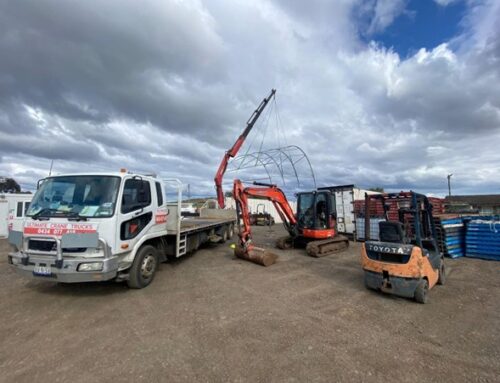
There is a particular elegance in equipment that combines two functions into one coherent system. A truck with a crane does precisely this—it collapses the distinction between transport and lifting, creating a single vehicle capable of moving loads and positioning them with hydraulic precision. For industries where time, access, and operational efficiency determine project success, this integrated approach transforms logistics from a series of separate steps into a streamlined, self-sufficient operation.
The Mechanics of Integrated Functionality
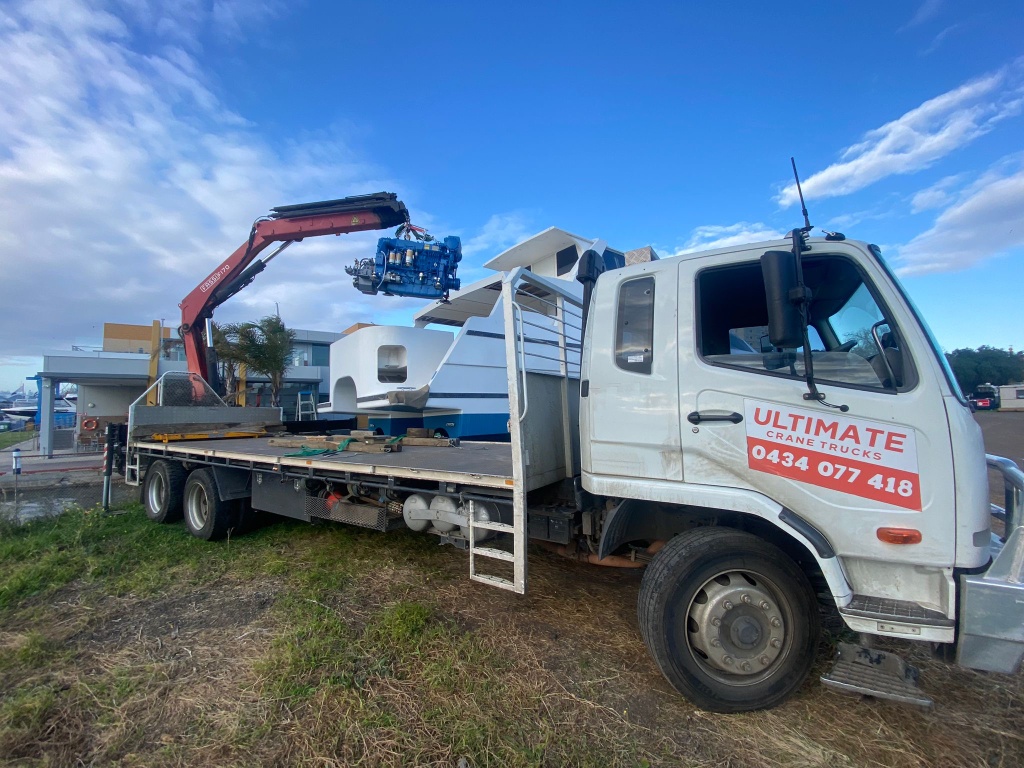
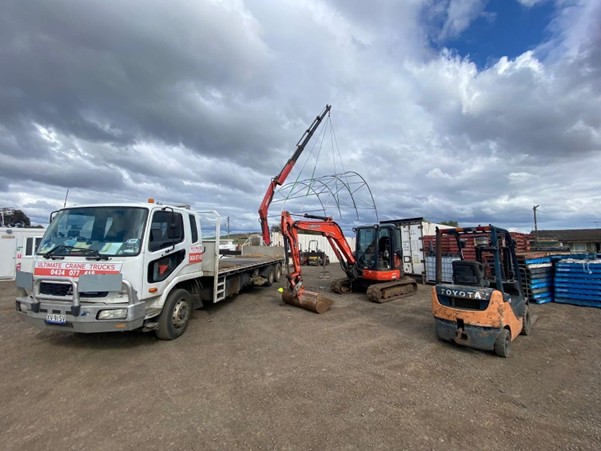
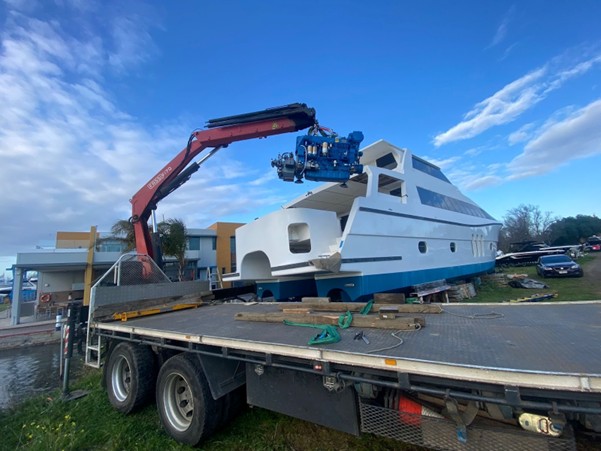
A truck with a crane, commonly referred to as a crane truck, Hiab, or crane-mounted truck, consists of a commercial truck chassis fitted with a hydraulic crane. The crane is typically mounted behind the cabin, allowing it to lift loads onto the truck’s flatbed for transport or to position materials directly at delivery sites.
This configuration eliminates the need for separate vehicles and equipment. Rather than coordinating a delivery truck, a crane, and potentially additional labour, a single operator can handle loading, transport, and unloading autonomously. This self-sufficiency reduces complexity, minimises coordination requirements, and accelerates project timelines.
For Melbourne’s construction, manufacturing, and industrial sectors, where projects often involve multiple deliveries to varied locations, truck with a crane operations represent a fundamental shift from fragmented logistics to integrated efficiency.
Why Kinetic Efficiency Matters
Kinetic efficiency refers to the optimisation of movement and energy within a system. In logistics, this translates to reducing unnecessary steps, minimising idle time, and eliminating redundant equipment. A truck with a crane achieves kinetic efficiency by consolidating transport and lifting into a single, coordinated operation.
Consider a traditional delivery scenario: materials arrive at a site via truck, but require a separate crane or forklift for unloading. This introduces waiting periods, equipment rental costs, and coordination challenges. If the crane is unavailable or the forklift cannot reach the required location, delays occur.
A truck with a crane removes these dependencies. The vehicle arrives, the operator positions the crane, and the load is placed exactly where it needs to be. The operation proceeds independently, without reliance on external equipment or additional personnel. This autonomy translates directly into reduced costs and improved scheduling reliability.
According to the Australian Department of Infrastructure, efficient freight movement is essential for economic productivity. Vehicles that combine multiple functions contribute to this efficiency by reducing the number of trips, vehicles, and handling stages required to complete deliveries.
Core Applications of Crane Trucks
The versatility of a truck with a crane makes it suitable for diverse industries and applications:
- Construction Material Deliveries
Construction sites require constant material deliveries—steel beams, concrete products, timber, scaffolding, and prefabricated components. Flatbed crane trucks can transport these materials and position them precisely where builders need them, whether on scaffolding levels, rooftops, or confined site areas.
This capability is particularly valuable for projects with limited ground access or where traditional cranes cannot operate due to overhead powerlines, adjacent buildings, or restricted site dimensions.
- Steel and Fabricated Metal Transport
Steel transport Melbourne operations rely heavily on crane trucks. Structural steel, beams, lintels, and fabricated components are heavy, awkward, and require secure lifting. Crane trucks can load these materials at steel yards, transport them to construction sites, and offload them directly into position, eliminating manual handling and reducing damage risk.
- Machinery and Equipment Relocation
Machinery transport Melbourne services use crane trucks to move industrial equipment, manufacturing machinery, and heavy plant assets. Whether relocating factory equipment, delivering new machinery to facilities, or transporting plant equipment between sites, crane trucks provide the lifting capacity and transport capability required.
For rural operations, farm machinery transport extends this capability to agricultural equipment, including tractors, harvesters, and irrigation systems.
- HVAC and Mechanical Systems
Air conditioner unit transport Melbourne operations frequently involve rooftop installations where traditional access is impractical. Crane trucks can lift commercial HVAC units, chillers, and air handling equipment directly from street level onto rooftops, reducing installation complexity and eliminating the need for expensive alternative lifting solutions.
- Water Tanks and Storage Systems
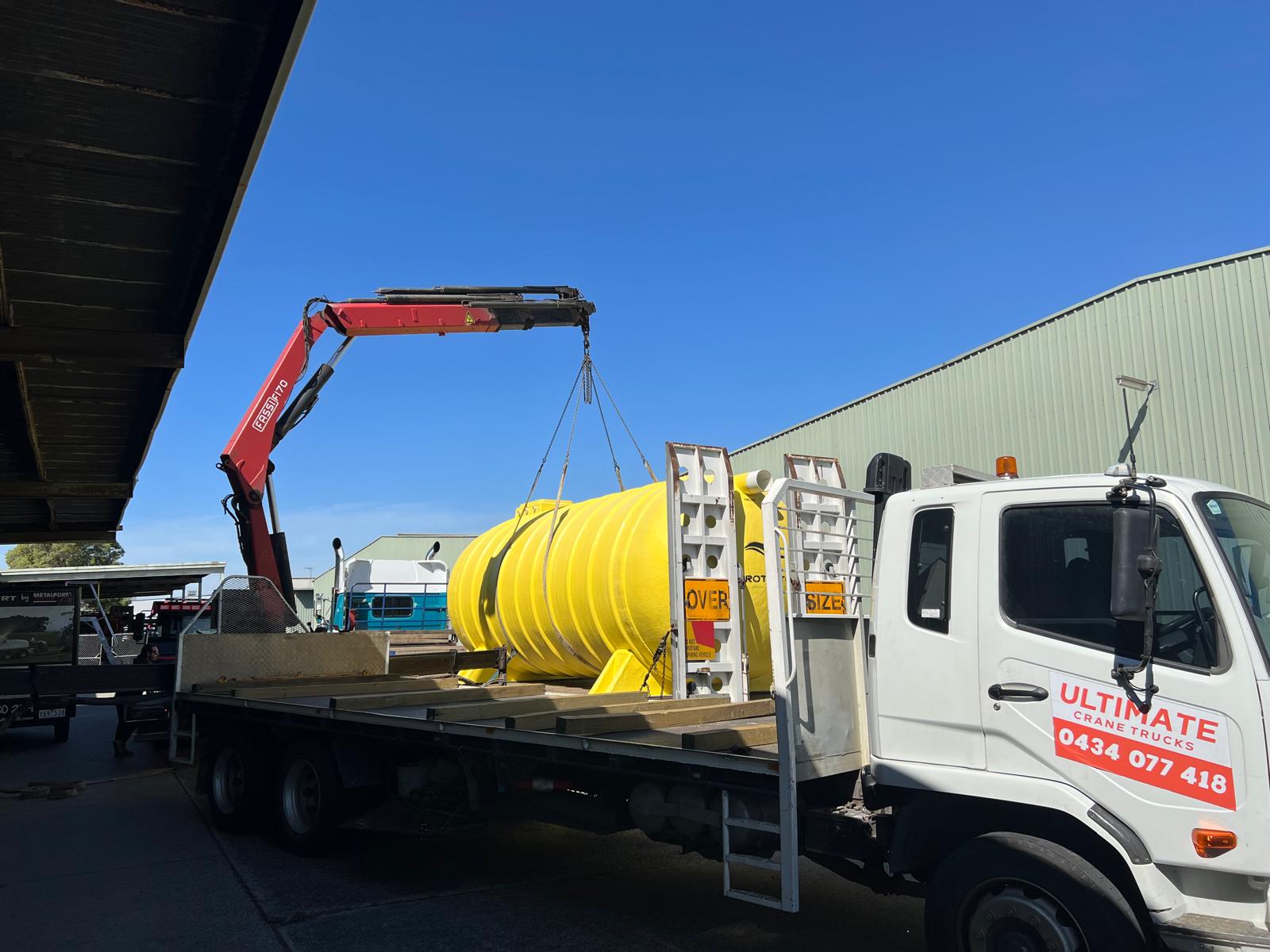
Water tank transport Melbourne services use crane trucks to deliver and position large steel and poly tanks. These tanks are bulky and heavy, requiring precise placement in residential yards, agricultural properties, or industrial sites. Crane trucks can lift tanks over fences and buildings, positioning them exactly where required without ground-level access.
- Site Sheds and Portable Structures
Site shed transport Melbourne operations rely on crane trucks to move and position portable site offices, storage containers, and temporary structures. These units must often be placed in tight locations where traditional cranes cannot access. Crane trucks provide the reach and flexibility needed to position site sheds efficiently.
- Timber and Building Products
Timber transport Melbourne services use crane trucks to deliver engineered timber, laminated beams, and large timber sections. These materials are long, heavy, and require secure loading and unloading. Crane trucks can position timber loads directly at framing locations, reducing handling and improving site efficiency.
- Scaffold Systems
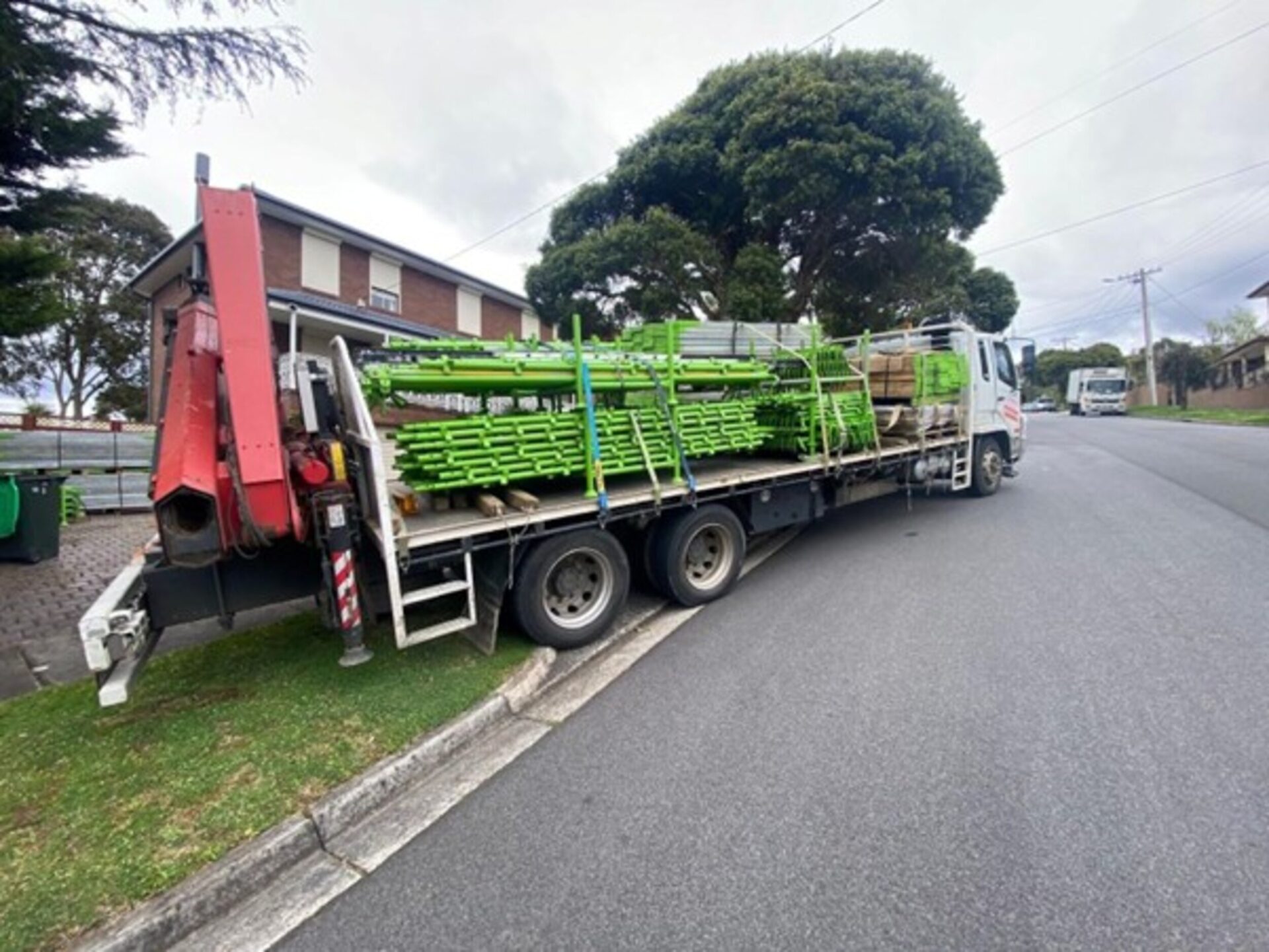
Scaffold transport Melbourne operations benefit from crane truck efficiency when delivering scaffold systems, planks, and components. The crane allows operators to lift scaffold pallets directly to upper levels or restricted areas, reducing manual handling and improving safety.
- Wall and Roof Trusses
Wall and roof truss transport Melbourne involves moving prefabricated structural components that are long, unwieldy, and fragile. Crane trucks can transport trusses and position them directly where builders need them, maintaining the structural integrity of these engineered components.
Technical Capabilities and Load Management
Modern crane trucks offer sophisticated hydraulic systems capable of precise load control. Operators use remote controls to extend the crane boom, adjust angles, and position loads with millimetre accuracy. This precision is essential when placing materials in restricted spaces, avoiding obstacles, or working near existing structures.
Load capacity varies depending on crane configuration, boom length, and vehicle size. Small crane truck hire services typically handle loads up to several tonnes, while larger Hiab truck hire configurations can lift significantly more. The crane’s reach also varies, with some models extending over 20 metres to access difficult locations.
Operators must account for load weight, boom extension, and vehicle stability when planning lifts. Outriggers and stabilisers deploy to maintain balance and prevent vehicle tipping during crane operations. Professional operators conduct load calculations and stability assessments before every lift, ensuring safe operation within equipment limits.
The Role of Operators in Kinetic Efficiency
While the equipment itself enables integrated transport and lifting, operator skill determines operational success. Experienced crane truck operators understand load dynamics, site access limitations, and safety requirements. They can assess sites quickly, identify potential hazards, and execute lifts efficiently.
This expertise becomes particularly important in urban environments where overhead powerlines, tight access, and public proximity create additional complexity. Operators must navigate traffic, position vehicles precisely, and conduct crane operations safely while managing time constraints and project schedules.
Professional crane truck services employ licensed operators with heavy vehicle qualifications and crane operation certifications. This training ensures operations proceed safely and in compliance with Victorian regulations.
Regulatory Compliance and Safety Standards
Operating a truck with a crane in Victoria requires adherence to WorkSafe Victoria safety standards and transport regulations. Operators must hold appropriate licences, vehicles must undergo regular inspections, and crane systems require periodic certification.
For oversize or overweight loads, permits and route approvals may be necessary. Professional crane truck operators manage these regulatory requirements, ensuring compliance and reducing legal risk for clients.
Load restraint is also critical. Materials must be secured according to Australian standards to prevent movement during transport. Crane trucks use approved tie-down systems, chains, straps, and load binders to ensure cargo remains stable regardless of road conditions.
Cost Analysis: Integrated vs. Fragmented Operations
The economic advantage of using a truck with a crane becomes clear when comparing costs across delivery methods:
Traditional Method:
- Transport truck hire
- Separate crane or forklift hire
- Additional operator wages
- Extended project duration due to coordination delays
- Increased site disruption time
Crane Truck Method:
- Single vehicle hire
- Single operator
- Faster turnaround
- Reduced coordination requirements
- Minimal site disruption
The consolidated approach typically results in lower overall costs, even when crane truck hourly rates exceed standard truck hire. The time savings, reduced labour, and elimination of equipment rental accumulate into significant economic benefits across projects.
For businesses managing regular material movements, establishing relationships with reliable crane truck providers creates predictable logistics costs and scheduling reliability.
Urban vs. Industrial Applications
Crane trucks operate effectively in both urban and industrial environments, though requirements differ:
- Urban Operations
Urban crane truck work emphasises manoeuvrability and access. Vehicle mounted crane services in residential suburbs and commercial districts must navigate narrow streets, avoid overhead wires, and operate within confined spaces.
Smaller crane trucks excel in these environments, offering the compact footprint needed for urban logistics while maintaining sufficient lifting capacity for most residential and light commercial projects.
- Industrial Operations
Industrial areas such as Dandenong, Campbellfield, and Laverton typically accommodate larger crane trucks with greater lifting capacity. These vehicles handle heavy industrial loads, oversized equipment, and bulk material deliveries that require maximum crane reach and load ratings.
For locations requiring extended boom reach, long reach crane truck services provide the additional distance needed to access difficult delivery points or overcome site obstacles.
Regional Coverage and Service Areas
Crane truck services operate throughout Melbourne and regional Victoria, supporting projects in:
- Metropolitan Melbourne: All suburbs from inner city to outer growth corridors
- Industrial Zones: Dandenong, Campbellfield, Laverton, Werribee, Hoppers Crossing
- Bayside Areas: Brighton, Sandringham, Mornington
- Regional Victoria: Geelong, Ballarat, Bendigo, and surrounding areas
This comprehensive coverage ensures crane truck services remain accessible regardless of project location, providing consistent support across diverse operational environments.
Multi-Drop Efficiency
One significant advantage of crane trucks is their suitability for multi-drop deliveries. When projects require materials delivered to multiple locations on the same day, crane trucks can load varied cargo at a central point and deliver items sequentially to different sites.
The crane’s self-sufficiency means the operator can offload materials at each location independently, without waiting for external lifting equipment. This capability dramatically reduces delivery times and improves scheduling reliability for projects involving multiple sites.
Choosing the Right Crane Truck Configuration
Selecting the appropriate crane truck involves assessing several factors:
- Load Weight: Ensure the crane’s lifting capacity exceeds the heaviest items being transported
- Boom Reach: Verify the crane can reach delivery points from accessible parking locations
- Vehicle Size: Consider access constraints and site conditions when selecting vehicle dimensions
- Flatbed Capacity: Confirm the flatbed can accommodate load dimensions and volumes
Professional crane truck providers assist with this selection process, recommending configurations based on specific project requirements and site conditions.
Ultimate Crane Trucks: Engineering Efficient Logistics
Ultimate Crane Trucks specialises in providing crane truck rental services in Melbourne that prioritise kinetic efficiency, safety, and reliability. Our fleet includes vehicles ranging from compact urban models to heavy industrial configurations, ensuring we can match equipment to project requirements.
We understand that logistics efficiency directly impacts project success. Our approach emphasises thorough planning, professional operation, and responsive service, ensuring deliveries proceed smoothly and on schedule.
Whether you require pool and spa transport Melbourne, construction material deliveries, machinery relocation, or any other crane truck application, our team provides the equipment, expertise, and commitment to operational excellence that Melbourne’s commercial and industrial sectors demand.
Contact Ultimate Crane Trucks today to discuss your crane truck requirements or request a free quote. Our team is available 24/7 to support your logistics needs across Melbourne and regional Victoria.